India and China agreed during their military talks on Sunday to stay in close touch and work out a mutually acceptable solution to the "remaining issues" in eastern Ladakh at the earliest, but there was no indication of clear forward movement in ending their three-year-long border standoff.
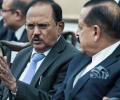
National Security Advisor Ajit Doval is likely to travel to Beijing within the next few weeks to lead the Indian delegation at a new edition of the Special Representatives dialogue on the larger boundary question that will be held after a gap of nearly five years, authoritative sources said.
Chinese Foreign Minister Wang Yi said on Friday that India-China relations have made positive strides and achieved a series of encouraging outcomes at all levels after last year's breakthrough ending the over four-year-long military standoff in eastern Ladakh. Wang's remarks came during his annual press conference as he replied to a question on how Beijing views the course of bilateral ties after the two countries ended the prolonged stalemate in the ties.

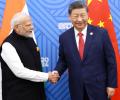
Prime Minister Narendra Modi and Chinese President Xi Jinping will hold bilateral talks on Wednesday on the margins of the Brazil, Russia, India, China, South Africa (BRICS) summit in Russia, in their first structured meeting since the eastern Ladakh border row erupted in May 2020.
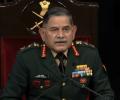
Army Chief General Upendra Dwivedi Monday said there is still a 'degree' of standoff between the Indian and Chinese militaries along the Line of Actual Control in eastern Ladakh and both sides need to sit down and firm up a broader understanding on how to calm down the situation.

Tacitly acknowledging the withdrawal of its troops from Depsang Valley in Ladakh, China on Monday said the "stand-off incident" with India has been resolved through "fruitful consultations," keeping the larger interests of bilateral relations in mind.

India and China have held their first diplomatic talks since withdrawing troops from two face-off points in eastern Ladakh, reflecting on the lessons learned from the border row to prevent future incidents. The two sides agreed to maintain peace and tranquillity in border areas, prepare for the next meeting of Special Representatives on the boundary question, and highlighted the importance of regular exchanges and contacts at diplomatic and military levels. The talks come after the completion of the disengagement process from the last two friction points, following an agreement finalized in October 2022.
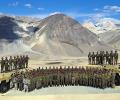
China has said that the disengagement of troops in eastern Ladakh by the Chinese and Indian armies is going on "smoothly" following a recent agreement between the two nations.
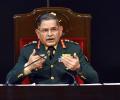
The General said it was "too early" to take a call on the role of Bangladesh, where a change in government may bring about a change in the relationship between it and India.
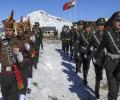
China and India were able to "reduce differences" and build "some consensus" on disengaging troops from friction points to end the standoff in eastern Ladakh and agreed to maintain dialogue to reach a resolution acceptable to both sides at an "early date", the Chinese defence ministry said on Thursday.
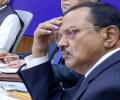
National Security Advisor Ajit Doval arrived in Beijing on Tuesday to take part in the India-China Special Representatives' talks to be held on Wednesday aimed at restoring the bilateral ties stalled for over four years' due to the military standoff in eastern Ladakh.

India and China on discussed the recent intrusion by Chinese troops at the Depsang Valley during External Affairs Minister Salman Khurshid's two-hour-long meeting with his Chinese counterpart Wang Yi.
China on Wednesday called for "proper and timely" settlement of the boundary issues with India to preserve peace at the borders in the light of the row over Depsang Valley in Ladakh where the troops of People's Liberation Army intruded recently.

India and China on Tuesday held talks to finalise details of External Affairs Minister Salman Khurshid's visit to Beijing and Chinese Premier Li Keqiang's trip to New Delhi, a day after both sides withdrew their troops from the Depsang Valley.

China on Thursday declined to give any timeline for withdrawal of its troops from Depsang valley in Ladakh but said the issue that has sparked new tensions in bilateral ties "will be properly resolved soon through negotiations".

Chief of Army Staff General Bikram Singh briefed Prime Minister Manmohan Singh and the Cabinet Committee on Security on the incursion by Chinese troops in Ladakh. "The CCS met today and the army chief briefed us on the Ladakh situation," Finance Minister P Chidambaram told reporters after the meeting.
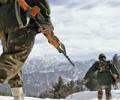
"Negotiations are going on at various levels to resolve the issue peacefully," Defence Minister A K Antony told media persons in Bengaluru.
China and India should "examine" the recent border stand off in Depsang Valley in Ladakh and be able to resolve such incidents "much quicker" in the future, External Affairs Minister Salman Khurshid said on Friday.
India will take up with Chinese Premier Le Kequiang the issue of the recent intrusion by the People's Liberation Army troops into Depsang valley in Ladakh and wants to push ahead with the bilateral dialogue on settling the border row.

External Affairs Minister Salman Khurshid arrived in Beijing on Thursday on a two-day visit to hold talks with Chinese leaders, just days after the resolution of a row over Depsang Valley in Ladakh, where the troops of People's Liberation Army intruded recently.
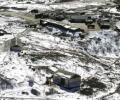
Bharatiya Janata Party President Rajnath Singh on Sunday demanded cancellation of External Affairs Minister Salman Khurshid's May 9 visit to China till it withdraws its army personnel from DepsangValley in Ladakh where they intruded a fortnight back
External Affairs Minister Salman Khurshid will go ahead with his visit to China on May 9 notwithstanding the ongoing standoff between Indian troops and Chinese forces which intruded deep inside Depsang Valley in Ladakh ten days back.

Ignoring India's demand to revert to a status-quo in Depsang Valley, China on Wednesday firmly stuck to its stand that its troops have not violated the Line of Actual Control "by a step" in the Ladakh region.

The exchange took place at five Border Personnel Meeting points along the LAC, the sources added.

India will look at disengagement and de-escalation of the situation along the Line of Actual Control (LAC) in eastern Ladakh after restoration of the status quo of April 2020, Army Chief General Upendra Dwivedi said on Tuesday, a day after New Delhi announced striking an agreement with Beijing to end the over four-year border row in the region.
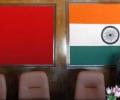
India and China have agreed to take measures to further ease the situation at the borders while continuing to implement the October agreement to resolve the standoff in eastern Ladakh comprehensively. The two sides held the 32nd meeting of the Working Mechanism for Consultation & Coordination on China-India Border Affairs (WMCC) in New Delhi, agreeing to maintain communication through diplomatic and military channels and safeguard sustainable peace and stability in the border areas. This meeting follows the October 21 agreement between the two countries to resolve the over four-year-long military standoff in eastern Ladakh.
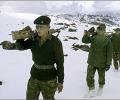
Three months after the 21-day stand-off in Depsang valley in Ladakh, Chinese troops again came deep inside the Indian territory in that area last week to reach upto 2 kms close to Indian posts, in one of five such incursions in the recent past.

India and China have made "some progress" in disengagement, External Affairs Minister S Jaishankar said on Sunday, describing it as a "welcome" move which opens up the possibility that other steps could happen.

China has violated border agreements, External Affairs Minister S Jaishankar said on Tuesday, noting that continued tension will cast a natural shadow over the rest of this relationship.

India and China have agreed to work towards a "roadmap" for rebuilding mutual trust following the border standoff in eastern Ladakh, according to a statement from the Indian Defence Ministry. Defence Minister Rajnath Singh met with his Chinese counterpart Dong Jun in Vientiane, Laos, on the sidelines of a regional security conclave. Singh called for drawing lessons from the "unfortunate border clashes" of 2020 and emphasized the need for cooperation rather than conflict. Both sides agreed to work towards a roadmap for rebuilding mutual trust and understanding, and a meeting of the Special Representatives and Secretary-Vice Minister mechanism will also take place soon.

The situation along the Line of Actual Control (LAC) in eastern Ladakh is stable but sensitive and not normal, Chief of Army Staff General Upendra Dwivedi said on Tuesday on the dragging military standoff between China and India in the region.
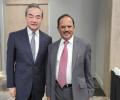
Doval is in Beijing for the 23rd round of the Special Representatives' talks being held after a gap of five years.

Xu, 60, is expected to travel to New Delhi soon to take over his new posting.

In a year bookended by intractable conflicts and geopolitical fragmentation, India focused on ramping up military prowess by broadly firming up defence procurement worth Rs 4.22 lakh crore even as Indian and Chinese militaries completed pulling back their troops from border face-off points in eastern Ladakh.

China on Monday said Defence Minister A K Antony's visit Beijing has given both countries an opportunity to enhance their "strategic cooperative partnership" and jointly maintain peace and tranquillity in the border areas through increased military-to-military coordination.

Chinese Foreign Minister Wang Yi has expressed readiness to join hands with India's National Security Advisor Ajit Doval to "properly handle" issues related to the situation on the ground in the border areas, amid the protracted border row in eastern Ladakh.

'Given China's past behaviour and their territorial claims, should we be sceptical regarding China's willingness to adhere to these agreements fully? The answer is yes.' 'As Ronald Reagan famously said in the context of the SALT talks, 'Trust, but verify!' India should also do the same.' 'This has already begun with foot patrolling, drones, satellite imagery and so on. India's military deployment did mirror China's and will continue to do so in the future.'

India and China on Wednesday held 'constructive' and 'forward-looking' diplomatic talks to resolve the over four-year border standoff along the Line of Actual Control (LAC) in eastern Ladakh but there was clear no indication of any breakthrough.

In their first structured bilateral talks in nearly five years, Prime Minister Narendra Modi and Chinese President Xi Jinping Wednesday agreed that India and China can have a 'peaceful and stable' relationship by displaying maturity and mutual respect and endorsed the pact on the resolution of the dragging eastern Ladakh border row.
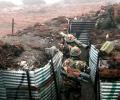
The Chinese military on Thursday said the situation along the India-China border 'at present' is 'generally stable' and both sides have maintained 'effective' communication to resolve the military standoff in eastern Ladakh.
 © 2026 Rediff.com - Advertise with us - Disclaimer - Privacy Policy - Sitemap - Feedback - About us - Terms of use - Grievances